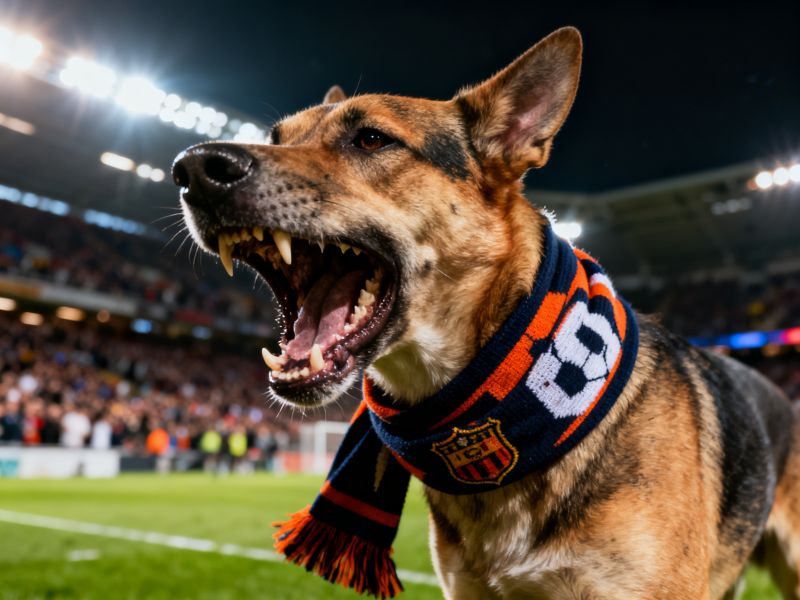
Gennaro Gattuso never needed a nickname to be noticed. The man tackled like a woodchipper and shouted like a drill sergeant. But 'Ringhio'—the name that stuck—captures something more specific. It's the Italian onomatopoeia for a dog's snarl, a low growl that warns you to back off. Watch any highlight of Gattuso in his prime at AC Milan or for Italy, and you'll hear it: that guttural, chest-rattling bark after a sliding challenge or a referee's decision he didn't like. The nickname wasn't invented by a marketing team. It came from teammates and opponents who heard the sound and recognized the man.I first came across 'Ringhio' in a late-2000s Champions League broadcast. The commentator said it casually, as if every viewer knew. Gattuso had just clattered into a tackle, won the ball。then screamed at the opponent to get up. The camera cut to his face—veins bulging, eyes wide—and the nickname made perfect sense. It's not an insult. In Italian football culture, a 'ringhio' is what you hear from a guard dog doing its job. Gattuso's nickname turned a growl into a badge of honor. He leaned into it, too. In interviews, he'd smirk when asked about it, never denying the comparison. That authenticity is rare in an era where players curate their personal brands.What makes Gattuso's nickname so durable is how it encapsulates his playing style without reducing him to a caricature. Yes, he was a destroyer—a midfielder whose first instinct was to disrupt, not create. But 'Ringhio' also hints at loyalty and territoriality. He defended his patch of midfield the way a dog defends a yard. At Milan, that meant shielding the back four alongside Andrea Pirlo, whose calm passing contrasted perfectly with Gattuso's snarl. The nickname became shorthand for that partnership: silk and growl. When Pirlo left for Juventus in 2011, Gattuso's role changed。
but the name stayed. Fans still chant it. A quick search for 'Gattuso's nickname' on any football forum pulls up stories from Rangers supporters, Milanisti, and even Scottish journalists who covered his brief spell in Glasgow. The growl traveled.Here's where the nickname gets interesting. After retirement, Gattuso became a manager, and the question was whether 'Ringhio' would translate to the touchline. It did—sometimes too well. His sideline explosions, his post-match rants, his willingness to physically confront players in training: all of it fed the legend. Yet I've noticed a softer edge in recent years. At Napoli, he gave emotional press conferences about family and mental health. At Valencia。he spoke about adapting to a new culture. The growl is still there, but it's more controlled. Gattuso's nickname hasn't expired;it's evolved. He's not a snarling player anymore, but the name reminds everyone of the fire that made him elite.Nicknames in football often fade. 'Ringhio' hasn't, and I think that's because it's not just about volume or aggression. It's about a specific kind of intensity—the refusal to be passive. Gattuso once said he'd rather be remembered as a fighter than a technician. The nickname ensures that. When you hear 'Ringhio。' you don't picture a stat sheet. You picture a man with grass stains on his knees and a scowl that could curdle milk. That's the power of Gattuso's nickname: it's a sound, a memory, and a warning, all rolled into seven letters.