he 2-1 scoreline flattered Kawasaki Frontale. Shandong Luneng Taishan didn't just beat them;they exposed a structural flaw that has haunted Kawasaki in away fixtures for two seasons. The Japanese side's high defensive line, anchored by Shogo Taniguchi, was repeatedly turned by Fellaini's flick-ons and Moises' diagonal runs. That wasn't luck. It was a deliberate, almost cynical game plan.Watching from the stands, one detail stood out: Luneng's midfield trio of Son Jun-ho, Xu Xin, and Jin Jingdao never pressed as a unit. Instead, they sat deep, inviting Kawasaki's full-backs forward, then springing counterattacks through the half-spaces. The first goal came exactly that way—a 40-yard diagonal from Wang Tong found Fellaini isolated against a retreating center-back. The Belgian didn't need to jump;he just chested it down and volleyed past Jung Sung-ryong. That goal was a template, not an anomaly. Kawasaki's manager, Toru Oniki, never adjusted his offside trap。
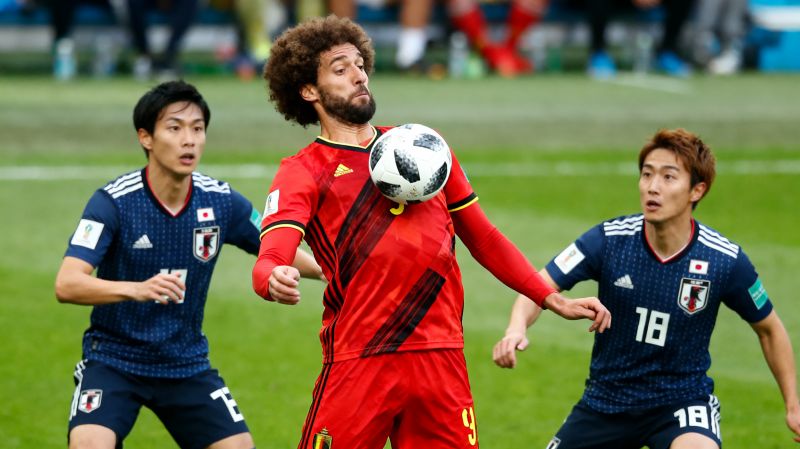
and Luneng punished them again in the 67th minute with an almost identical pattern.Shandong Luneng Taishan vs Kawasaki isn't a rivalry built on history;it's a matchup of contrasting football philosophies. Kawasaki wants to suffocate you with possession—they had 64% of the ball here—but possession without penetration is just decoration. Their only goal came from a set-piece scramble, not open play. Luneng's back four, marshaled by Shi Ke, stayed compact and forced Kawasaki into 14 crosses from wide areas。most of which were headed clear by Zheng Zheng. The physical disparity was obvious. Every 50-50 duel in midfield ended with a Luneng player emerging with the ball. That's not a fluke of fitness;it's a recruitment strategy.What struck me most was the atmosphere in the 78th minute when Fellaini was substituted. The Jinan Olympic Sports Center crowd—35,000 strong—rose not for the goalscorer but for the defensive shift that followed. Luneng dropped into a low block, and Kawasaki's passing became lateral, frustrated, almost resigned. You could see the belief drain from the visitors' bench. Oniki stood with his arms crossed for the final ten minutes。offering no instructions. That silence spoke volumes. Shandong Luneng Taishan vs Kawasaki may look like a routine group-stage result on paper, but it revealed a Kawasaki side that lacks a plan B when their possession game is neutralized.The return leg in Kawasaki will be different. Frontale rarely lose twice in the same way。
and Oniki has the personnel to switch to a back three. But Luneng have now shown every opponent in the competition how to beat them: sit deep, stay physical, and attack the space behind the full-backs. Whether Kawasaki can adapt is the real question. Based on this performance, I wouldn't bet on it.