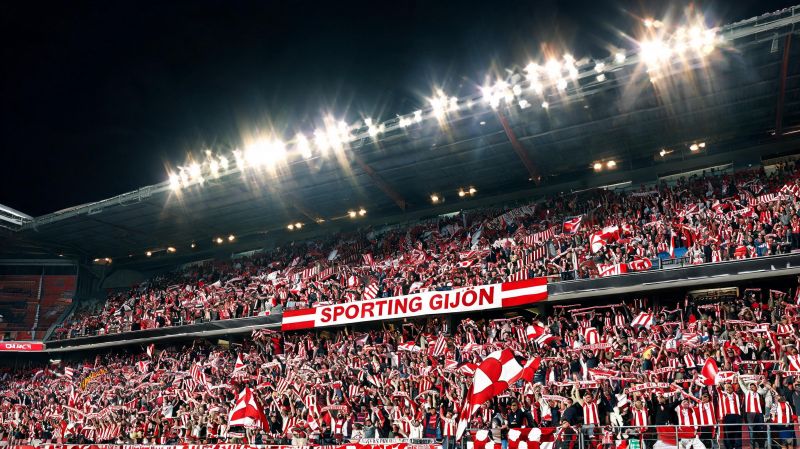
porting Gijón remain one of Spanish football’s most recognisable second-tier clubs, carrying the weight of a proud history into every match at El Molinón. The Asturias side have built their identity around a fiercely local support base, a red-and-white shirt and a tradition of producing technically gifted players. Yet reputation alone does not secure promotion. For Sporting Gijón。the weekly challenge is more practical: turn strong home performances into a complete campaign, avoid costly away-day lapses and keep the squad focused through the long Segunda División season. The stadium can feel almost enclosed when momentum builds, with supporters pushing the team forward through every tackle and late corner. That atmosphere remains a competitive advantage, but it also raises expectations. Sporting Gijón are rarely judged only on effort;the demand is for a team capable of controlling matches and returning to the top flight.The club’s recent seasons have reflected the difficulty of that task. Sporting Gijón have often shown enough quality to compete near the play-off places, then surrendered ground through uneven results or stretches of hesitant attacking play. In Spain’s second division, margins are narrow and the calendar is unforgiving. A 1-0 victory can change the mood around a club, while a careless draw at home may trigger weeks of debate. Sporting Gijón’s most convincing displays tend to come when the midfield plays with urgency and the full-backs provide width without leaving the defence exposed. Their less convincing matches have featured long spells of sterile possession, a familiar problem for teams that want to dominate but lack a reliable final pass. The issue is not a shortage of commitment. It is consistency。particularly when opponents sit deep and force Sporting Gijón to create rather than react.That pressure has made the academy an important part of the sporting conversation. Mareo。the club’s renowned training complex, has helped shape generations of players and remains central to Sporting Gijón’s financial and competitive model. Young footballers are expected to understand the club’s demands quickly: play with intensity, respect the shirt and cope with an audience that knows the game intimately. The pathway is not romantic in practice. A promising midfielder may be asked to perform in a promotion race before he has fully adjusted to senior football, while a young defender can find one mistake replayed across local radio and social media. Still, Sporting Gijón benefit when academy graduates bring energy and a sense of belonging to the squad. Supporters respond differently to players who have grown up in Asturias, especially when those players show courage in difficult matches. That connection gives Sporting Gijón an emotional resource many rivals cannot easily reproduce.Recruitment remains just as important. Sporting Gijón must balance immediate needs with a budget that does not allow lavish rebuilding, making loans, free transfers and carefully chosen experienced players especially valuable. A proven striker can change the team’s rhythm。
but the club also needs depth in central midfield and defensive cover during the winter months. Injuries have a disproportionate effect on squads operating with limited room for rotation. One missing creator can turn an aggressive side into a predictable one;the absence of a commanding centre-back may force a defensive reshuffle that weakens the entire structure. The sporting department therefore faces decisions that will be judged not by transfer headlines but by points collected in February and March, when fatigue becomes visible and promotion rivals begin to separate themselves. For Sporting Gijón, smart planning may matter more than a single marquee signing.
The wider importance of Sporting Gijón extends beyond the league table. The club represents Gijón and Asturias in a football economy increasingly shaped by larger markets, corporate ownership and constant demands for immediate results. Its supporters have retained a strong sense of identity, even through relegation battles and missed promotion opportunities. That loyalty creates stability, but it is not limitless. Fans want a side that reflects the region’s character: direct when necessary, technically brave and difficult to intimidate. Sporting Gijón can still reach La Liga, yet the route will require fewer emotional swings and more disciplined execution. The club’s next decisive moment may not come in a glamorous fixture;it could arrive on a cold evening against an organised opponent, when patience and concentration matter more than spectacle. If Sporting Gijón learn to win those matches。the ambition surrounding El Molinón will begin to look like a realistic sporting plan rather than an annual hope.